

The Art of Thinking Clearly: The International Bestseller That Improves Decision Making and Counters Faulty Reasoning with Research-Backed Good Sense
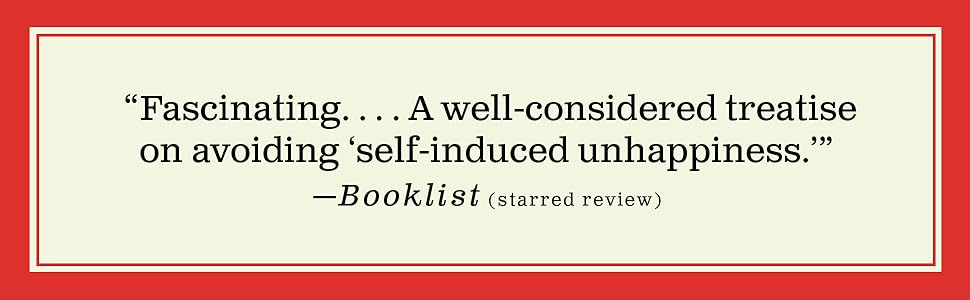
“A serious examination of the faulty reasoning that leads to repeated mistakes by individuals, businesses, and nations…In this fascinating book, Dobelli does not offer a recipe for happiness but a well-considered treatise on avoiding ‘self-induced unhappiness.’” — Booklist (starred review)
The Art of Thinking Clearly by world-class thinker and entrepreneur Rolf Dobelli is an eye-opening look at human psychology and faulty reasoning — an essential book for anyone who wants to improve their decision-making, avoid “cognitive errors,” and make better choices in all aspects of their lives.
Have you ever: Invested time in something that, with hindsight, just wasn’t worth it? Or continued doing something you knew was bad for you? These are examples of cognitive biases, simple errors we all make in our day-to-day thinking. But by understanding these mental models and how to spot them, we can avoid them and make better decisions.
Simple, clear, and always surprising, this indispensable book will change the way you think and transform your decision-making—work, at home, every day. It reveals, in 99 short chapters, the most common errors of judgment, and how to avoid them.
Learn to spot the mental traps that derail your thinking every day:
Survivorship Bias: Why we systematically overestimate our chances of success and how visiting the “graveyards” of failed projects can clear our minds.Sunk Cost Fallacy: The mental trap that makes us continue with a project or relationship, even when it’s a lost cause, just because we’ve invested so much.Confirmation Bias: Uncover the mother of all misconceptions and learn why we actively filter new information to fit our existing beliefs.The Anchoring Effect: Discover how irrelevant numbers, from a wheel of fortune to your Social Security digits, can dramatically influence your decisions.Critical Thinking Tools: Go beyond simply knowing what these biases are and learn practical ways to avoid them and transform your choices at work and at home.
From the Publisher


Publisher : Harper Paperbacks
Publication date : May 6, 2014
Edition : Reprint
Language : English
Print length : 384 pages
ISBN-10 : 0062219693
ISBN-13 : 978-0062219695
Item Weight : 10.4 ounces
Dimensions : 5.31 x 0.86 x 8 inches
Best Sellers Rank: #6,759 in Books (See Top 100 in Books) #17 in Business Decision Making #20 in Cognitive Psychology (Books) #31 in Decision-Making & Problem Solving
Customer Reviews: 4.5 4.5 out of 5 stars (7,831) var dpAcrHasRegisteredArcLinkClickAction; P.when(‘A’, ‘ready’).execute(function(A) { if (dpAcrHasRegisteredArcLinkClickAction !== true) { dpAcrHasRegisteredArcLinkClickAction = true; A.declarative( ‘acrLink-click-metrics’, ‘click’, { “allowLinkDefault”: true }, function (event) { if (window.ue) { ue.count(“acrLinkClickCount”, (ue.count(“acrLinkClickCount”) || 0) + 1); } } ); } }); P.when(‘A’, ‘cf’).execute(function(A) { A.declarative(‘acrStarsLink-click-metrics’, ‘click’, { “allowLinkDefault” : true }, function(event){ if(window.ue) { ue.count(“acrStarsLinkWithPopoverClickCount”, (ue.count(“acrStarsLinkWithPopoverClickCount”) || 0) + 1); } }); });
Original price was: $1,872.92.$842.30Current price is: $842.30.
10 reviews for The Art of Thinking Clearly: The International Bestseller That Improves Decision Making and Counters Faulty Reasoning with Research-Backed Good Sense
Add a review
Related Products


Original price was: $1,872.92.$842.30Current price is: $842.30.

Professor dot biz –
Comparing to Wiki’s Cognitive Bias List?
Many know that Wikipedia has a “mistake” list of potential cognitive errors and biases that links to nearly infinite mistakes these poor brains can make! This is like the little book of 100 things that can go right vs. the 2,000 page book of clinical maladies that can descend upon us each unsuspecting day.This read is truly an eye-opening joy ride! Even though the author claims happiness is genetic and not to expect too much, hey, get this, it’s enlightening AND entertaining! How is it better than the plethora of error books and self help sites out there, as well as Wiki’s extensive list? Wow, no comparison. Dobelli uses short, punchy “chapters” that are almost just a few paragraphs to explain, define, exemplify and illustrate each cognitive trap, error and bias– astonishing. The humor is dry but everywhere, especially his many “aha” insights about how these errors helped us keep from being killed as cave folk but do us disservice now. He wryly shares that the guy who questioned the herd mentality probably didn’t contribute to the gene pool if he did so while all his buddies were running from a lion! This author’s sense of humor is too contagious.As you get through the first few “chapters” your mind will be reeling with the insights– they really are more subtle than the fun tone suggests at first. Then, you look at the 300 pages that remain and realize how PACKED this book is with eye opening insights– wow. This is one of those rare books after which you never look at the world, your life, or your relationships the same, EVER again!Even if you’ve studied these mistakes and biases for years, or are an expert in the field (an “authority?” oh, oh), Rolf’s “multiple angle” style of illustration, story telling, examples, descriptions and taxonomy really drives the trap home in deeply understandable, gut ways you might not have experienced with other authors. A dry topic like exit barriers is generalized with an error about sunk costs, and examples given for everything from relationships to habits, never mind investments! Though he is a friend of Taleb’s, don’t believe the hype that this is a “business” or investing book– its examples and applications range much farther than that universe, down to our daily unconscious choices and patterns.Highly recommended for anyone who enjoys seemingly light page turners that turn out to be much deeper and life changing. NOT a self help tome, in fact he makes great fun of self helpers, showing them the covariate mirror where they ignored their own genetics and luck to get there, having nothing to do at all with the “techniques” they are now espousing and promoting. Best of all, this is a guy who continually makes fun of himself and tells many stories about his own “stupidity” — subtly teaching us he’s caught on to the subtlest trickster of all– ego.Library Picks reviews only for the benefit of Amazon shoppers and has nothing to do with Amazon, the authors, manufacturers or publishers of the items we review. We always buy the items we review for the sake of objectivity, and although we search for gems, are not shy about trashing an item if it’s a waste of time or money for Amazon shoppers. If the reviewer identifies herself, her job or her field, it is only as a point of reference to help you gauge the background and any biases.
Ian Mann –
including the highly intelligent, resulting in everyone falling into the same cognitive …
In the 1960s psychologists began to examine scientifically, how people think, decide and take action. The result, explains the author of this book, Rolf Dobelli, was a “theory of irrationality that states: thinking is in itself not pure, but prone to error.” This, they found, was true of all people, including the highly intelligent, resulting in everyone falling into the same cognitive errors.More interestingly, it appears we all “systematically err in the same direction.” If this is indeed true, it means we all make predictable mistakes. If it is true, and it appears to be, we should be able to fix at least some of them and avoid making these errors in our lives.Dobelli has gathered 99 errors common to us all. He provides short, amusing and pithy insights into their form and causes. This has not made his life error free, he reports. However, “to make things simple, I have set myself the following rules: in situations where the possible consequences are large, I try to be as reasonable and rational as possible when choosing… In situations where the consequences are small I forget about rational optimisation and let my intuition take over.”This book is a useful compendium of error. Reading this book will certainly increase one’s awareness of possible errors, which will lead to better decisions. To illustrate, I have chosen five errors of the Dobelli’s 99.Social ProofYou are roaming the Serengeti some 50,000 years ago, and your hunter-gather companions suddenly break into a desperate run away from some disturbance. What should you do? Mindlessly follow, or consider the possibility that it is a gazelle rather than a predator. Having seen a thoughtful companion become some animal’s lunch you run with the crowd.“Social proof” is the legacy of this herd instinct that dictates that individuals are behaving correctly when they act the same as other people. Social proof is behind stock market bubbles, as well as stock market stampedes. It is no different in the worlds of fashion, management techniques, and diets.Social proof informs even simple decision such as selecting a restaurant in an area with which you are unfamiliar. It seems sensible to choose the one that is full over a poorly patronised one.Novelist W. Somerset Maugham put the error of social proof succinctly: ‘If 50 million people say something foolish, it is still foolish.’Sunk Cost FallacyThe film was awful. After an hour, Dobelli whispered to his wife: ‘Come on, let’s go home.’ She replied : ‘No way. We’re not throwing away $ 30.’ The $ 30 is not reason to stay, that would be a thinking error. The money was been spent, and will not be returned. This is an example of the sunk cost error.So often in business, there is the sense that having invested so much, it would be wrong to stop now. Stopping now, makes the investment seem a mistake. The sunk cost fallacy is most dangerous when we have invested time, money, energy, commitment or love in something.The need for consistency drives this type of irrational behaviour. Deciding to cancel the project before it is completed is to admit that we had made a mistake.Sometimes the consequences of this thinking error costs lives as when America extended their involvement in the Vietnam War. Their thinking: ‘We’ve already sacrificed so much for this war; it would be a mistake to give up now.’ReciprocityPsychologist Robert Cialdini has studied the phenomenon of reciprocity and concluded that people have discomfort feeling they are indebted to another person.Dobelli offers this example: “A supplier of screws invites a potential customer to join him at a big sports game. A month later, it’s time to order screws. The desire not to be in debt is so strong that the buyer gives in and places an order with his new friend.”This phenomenon has a long history. When primitive man’s food supplies were subject to high fluctuations, he needed others to share their food with him. When he killed an animal too large to eat in one day, he would share the meat with others in his group. Doing this would ensure that they share their meat with him when he is short.When approached in the supermarket, with an offer of a taste of wine, a chunk of cheese or a handful of olives, Dobelli advises to refuse the offer. The error of reciprocity has led many to ending up a pantry full of goods they do not even like.Contrast EffectWe judge something to be beautiful, expensive or large only if we have something ugly, cheap or small to compare it to.Experiments indicate that people will walk an extra ten minutes to save $ 10 on food. The same people, however would not walk ten minutes to save $ 10 on a $ 1,000 suit. The whole category of discount business is only viable because of this error, Dobelli claims.In the investment arena, the error leads people to believe a share is good value because it is 50% below the peak price. The share price is what it is, and comparison is irrelevant. All that matters is whether the share goes up or down in the future.The contrast effect also plays out in the social arena. If you are dating it is not prudent to double date with your supermodel friend. This makes you appear less attractive than you really are!Chauffeur KnowledgeAccording to Charlie Munger, Warren Buffett’s business partner, there are two types of knowledge. “Real knowledge” is what people have when they have invested time and effort to understanding a topic. “Chauffeur knowledge” is the result of learning how to put on a show. Warren Buffett uses the phrase, ‘circle of competence’ to avoid this error. ‘You have to stick within what I call your circle of competence. You have to know what you understand and what you don’t understand. It’s not terribly important how big the circle is. But it is terribly important that you know where the perimeter is.’It is so easy to not confuse the company spokesperson, the newscaster, and the cliché generator with those who possess true knowledge. You can recognize the difference because the true experts know what they know and what they do not know.This book is a “must read!” We cannot do enough to protect ourselves from our thinking errors and the author sites 99 such errors. Much of the material in this book can be found scattered elsewhere. The value of this book is that the information is in one place.Readability Light –+– SeriousInsights High –+– LowPractical High –+– Low*Ian Mann of Gateways consults internationally on leadership and strategy and is the author of Strategy that Works.
Love hair it very soft and full made me a part wig with this hair will be getting more soon –
great read
I don’t read but I love this book. So yes I recommend this book for anybody and learned a lot from it.
tj231 –
Great book to focus your thinking
The clear, concise, easy to read format of this book make it enjoyable and easy to read. I would highly recommend this book as a companion to Thinking Fast, and Slow. It is a great synopsis of the deeper points in that book.
AliB –
Better way to understand your decisions
I love this book it’s given me so much to think about regarding how I make my decisions. I recommended it to a friend.I also read a few chapters to my husband so we can get better alignment on big decisions.
Fazildine Rachidi –
J’aime beaucoup le livre, il est très intéressant. En plus, il a été livré à la date que j’attendais avec impatience.
VG –
There are two things I look for in a non-fiction book:1) Quality content applicable to my life – this is most important2) Well written content that I can get through without engaging all the energy I can muster through willpower to just get through it.It is simple really, if I struggle to stay awake reading the “quality material” I will not retain it and it will not be that useful for me.This is why I rate this book at full five stars. Chapters are small, backed by both research and stories. Research gives it credibility, stories are just so much fun to read. You can pick up where you left off and read this before bed or during lunch.Great and thought provoking book.P.S. I should note that by chance, most of the books referenced by the author I have read (notably Antifragile, Black Swan, Fooled by Randomness and Thiking Fast and Slow) and yet I did not find reading same examples off-putting, on the contrary, Rolf does a great job putting his own spin on the story and adds more stories. I’ve enjoyed this book very much.
Hani –
The book is like a nice summary of many great ideas and mental models.
Aled Ball –
Great read.Bite size chapters for gradual understanding and implementation into your every day life.It’s sorta like a self help book, with a daily dose of knowledge and insight into… ya!
Shakil Ahmed –
Check before order book is not what I expected